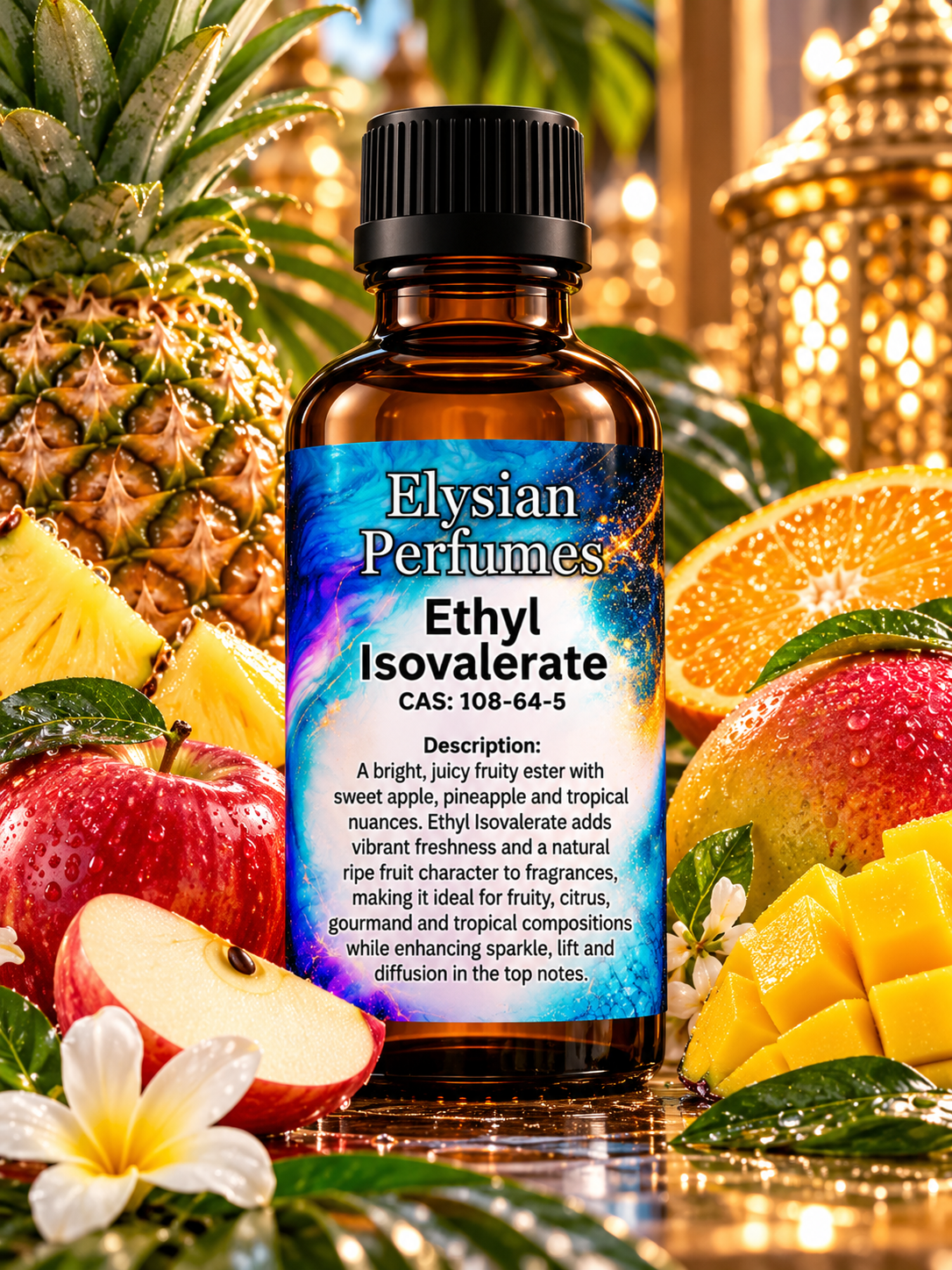
Ethyl Isovalerate – Juicy Apple, Pineapple & Tropical Fruit Fragrance Enhancer | Perfume Grade Aroma Chemical
Ethyl Isovalerate – Juicy Apple, Pineapple & Tropical Fruit Fragrance Enhancer | Perfume Grade Aroma Chemical
Short Description
Ethyl Isovalerate is a powerful and highly diffusive fruity aroma chemical celebrated for its distinctive fresh apple character, juicy pineapple nuances and vibrant tropical-fruit sweetness.
With its combination of crisp green apple, ripe pineapple, delicate berry notes and subtle green freshness, Ethyl Isovalerate introduces exceptional brightness, juiciness and natural fruity character to fragrance compositions.
Particularly valuable in apple, pineapple, tropical fruit, berry and contemporary fruity-floral fragrances, Ethyl Isovalerate is an important ingredient for perfumers looking to create lively, realistic and beautifully balanced fruit accords.
Its bright, sparkling character makes it especially useful for developing modern fruity perfume openings and enhancing the natural impression of fresh fruit.
Supplied as a 10% ready-to-use solution in Dipropylene Glycol (DPG) for convenient and controlled fragrance formulation.
What Is Ethyl Isovalerate?
Ethyl Isovalerate (CAS: 108-64-5), chemically known as Ethyl 3-Methylbutanoate or Ethyl 3-Methylbutyrate, is a fruity ester widely used in professional fragrance development.
It belongs to the family of organic esters, many of which contribute the bright, sweet and recognisable fruit characteristics found in natural fruit aromas.
Its distinctive fragrance profile combines fresh green apple, juicy pineapple, sweet mixed fruit, subtle berry nuances and a lightly green, ethereal freshness.
Ethyl Isovalerate is particularly recognised for its ability to introduce a realistic fruity lift into fragrance compositions.
Unlike heavier sweetening materials such as Ethyl Maltol or Furaneol, which contribute caramelised, candy-like or cooked-fruit effects, Ethyl Isovalerate produces a distinctly fresh and juicy fruit impression.
This makes it especially useful for creating fragrances inspired by freshly cut apples, pineapple, tropical fruit cocktails and vibrant mixed-fruit compositions.
Its pronounced odour intensity allows relatively small additions to noticeably influence the opening character of a perfume.
In fruity-floral fragrances, Ethyl Isovalerate can introduce a sparkling fruit effect that complements rose, jasmine, peony and other floral compositions.
It also blends effectively with citrus oils, green materials and other fruity esters, making it an excellent building block for fresh and tropical fragrance structures.
Because it is relatively volatile, Ethyl Isovalerate contributes primarily to the top notes of a composition and should be supported by other materials when a longer-lasting fruit impression is required.
Aroma Profile
Odour Description
Fresh green apple
Juicy pineapple
Sweet tropical fruit
Crisp fruity sweetness
Delicate berry nuances
Fresh green undertones
Slightly banana-like fruitiness
Subtle orange nuances
Bright and sparkling
Sweet ester character
Freshly cut fruit
Diffusive and lively
Olfactive Family
Fruity / Apple / Pineapple / Tropical / Sweet / Green
Fragrance Position
Top Note
Why Perfumers Use Ethyl Isovalerate
Creates realistic fresh apple fragrance effects
Adds juicy pineapple character to tropical accords
Enhances the brightness of fruity compositions
Introduces sparkling fruity top notes
Supports natural-smelling mixed-fruit fragrances
Adds freshness to berry-inspired accords
Complements tropical-fruit combinations
Enhances the fruity opening of floral fragrances
Introduces subtle green-fruit characteristics
Adds complexity to fresh citrus compositions
Supports modern fruity and gourmand perfumes
Creates vibrant and recognisable fruit effects at low concentrations
Common Applications
Ethyl Isovalerate is particularly useful in:
Fine Fragrance
Green Apple Fragrances
Pineapple Perfumes
Tropical Fruit Accords
Mixed Fruit Fragrances
Fruity-Floral Perfumes
Berry Accords
Raspberry Fragrances
Fresh Citrus Perfumes
Apple and Pear-Inspired Accords
Fresh Gourmand Compositions
Tropical Cocktail-Inspired Fragrances
Contemporary Feminine Fragrances
Fresh Unisex Perfumes
Fruity Shampoo Fragrances
Selected Home Fragrance Applications
Blends Exceptionally Well With
Ethyl Butyrate
Ethyl Formate
Isoamyl Isovalerate
Isoamyl Formate
Benzyl Acetate
Aldehyde C-14 (Peach)
Aldehyde C-18 (Coconut)
Gamma Decalactone
Gamma Octalactone
Furaneol
Raspberry Ketone
Alpha Ionone
Beta Ionone
Phenyl Ethyl Alcohol
Hedione
Linalool
Linalyl Acetate
Cis-3-Hexenol
Bergamot Essential Oil
Lemon Essential Oil
Mandarin Essential Oil
Sweet Orange Essential Oil
Iso E Super
Ethylene Brassylate
These combinations allow perfumers to develop everything from crisp green apple fragrances and juicy pineapple accords to sophisticated tropical fruit, berry and contemporary fruity-floral compositions.
Typical Uses
Green Apple Accords
Ethyl Isovalerate is particularly valuable for developing the bright, juicy character associated with fresh apples.
Its sweet, slightly sharp and green-fruity qualities contribute to the impression of freshly cut apple flesh.
When combined with suitable green materials, fruity esters and fresh aldehydic ingredients, it supports realistic green apple accords.
Cis-3-Hexenol can introduce additional crisp green freshness, while complementary fruity materials provide sweetness and body.
This combination is especially useful for fragrances inspired by fresh Granny Smith apples and crisp green-fruit compositions.
Pineapple Fragrances
Ethyl Isovalerate contributes a characteristic juicy pineapple nuance that complements stronger pineapple materials.
When blended with Ethyl Butyrate, citrus ingredients and other tropical-fruit esters, it can create a brighter and more dimensional pineapple accord.
While Ethyl Butyrate supplies a particularly recognisable pineapple character, Ethyl Isovalerate contributes additional apple-like fruitiness, freshness and complexity.
This makes it useful in both realistic pineapple fragrances and modern fruity perfume compositions.
Tropical Fruit Accords
Ethyl Isovalerate is an excellent supporting ingredient in tropical-fruit fragrances.
Its fresh apple and pineapple characteristics complement mango, passion fruit, guava and mixed tropical-fruit concepts.
When combined with suitable fruity esters, lactones and citrus materials, it helps create a bright and juicy tropical opening.
Its freshness provides contrast to the creamy and sweet characteristics often associated with tropical fragrances.
Berry Fragrances
Ethyl Isovalerate can introduce a lively fruity brightness to raspberry, blackberry, blueberry and mixed berry-inspired compositions.
Its sweet, diffusive character complements deeper berry materials without contributing excessive caramelised sweetness.
When combined with Raspberry Ketone, Alpha Ionone, Beta Ionone and suitable fruity ingredients, it helps create greater contrast between fresh fruity top notes and richer berry heart notes.
Fruity-Floral Fragrances
Ethyl Isovalerate works particularly well in modern fruity-floral fragrances.
Its sparkling apple and pineapple nuances complement floral ingredients such as Hedione, Phenyl Ethyl Alcohol, Linalool and suitable rose materials.
Small additions can give floral fragrances a brighter, juicier opening.
This is particularly valuable in contemporary feminine fragrances where freshness and fruitiness are desired without creating an overly sweet gourmand effect.
Fresh Citrus Fragrances
Ethyl Isovalerate complements bergamot, lemon, mandarin and sweet orange essential oils.
Its fruity sweetness softens sharp citrus effects while maintaining a fresh, energetic opening.
When combined with citrus materials and suitable green ingredients, it helps create modern citrus-fruit compositions.
Apple & Tropical Cocktail Fragrances
The fruity ester character of Ethyl Isovalerate makes it useful in fragrances inspired by tropical cocktails and refreshing fruit drinks.
When combined with Ethyl Formate and other fruity esters, it can contribute a sparkling, juicy and slightly ethereal impression.
Additional citrus, floral or woody materials can be used to build a more complete fragrance structure.
Fresh Gourmand Fragrances
Ethyl Isovalerate can provide a bright fruity contrast above creamy, vanilla or caramel gourmand notes.
Its fresh apple and pineapple character is useful when a gourmand composition requires a lively fruit opening rather than continuous heavy sweetness.
Combined with suitable creamy lactones, vanilla materials and fruity ingredients, it can help create sophisticated fruit-and-cream fragrance concepts.
Modern Masculine & Unisex Fragrances
Although strongly associated with fruit accords, Ethyl Isovalerate can also contribute to modern masculine and unisex compositions.
When combined with Iso E Super, Hedione, citrus materials and aromatic woody ingredients, it introduces a subtle fruity brightness.
Careful dosing allows the material to enhance freshness without making the overall fragrance predominantly sweet or tropical.
Ethyl Isovalerate vs Other Fruity Esters
Several aroma chemicals contribute fruity effects, but each offers a distinctive fragrance character.
Ethyl Isovalerate
Fresh green apple
Juicy pineapple
Sweet mixed fruit
Subtle berry nuances
Light green freshness
Particularly useful for apple, pineapple and tropical-fruit accords
Ethyl Butyrate
Strong pineapple character
Sweet tropical-fruit brightness
Juicy, recognisable fruit effect
Particularly valuable for pineapple and tropical compositions
Ethyl Formate
Light, ethereal fruitiness
Rum and cognac-like nuances
Fermented-fruit character
Highly volatile
Particularly useful for boozy and sparkling top-note effects
Isoamyl Isovalerate
Sweet, ripe-fruit character
Fruity ester richness
Useful for expanding the body and complexity of fruit accords
Isoamyl Formate
Fruity, slightly alcoholic character
Fresh ester-like notes
Useful for creating additional complexity in fruity top-note compositions
Combining these esters in carefully balanced proportions allows perfumers to create more realistic and multidimensional fruity fragrance effects.
Product Specifications
| Specification | Details |
|---|---|
| Material | Ethyl Isovalerate |
| Chemical Name | Ethyl 3-Methylbutanoate |
| Alternative Names | Ethyl 3-Methylbutyrate / Isovaleric Acid Ethyl Ester |
| CAS Number | 108-64-5 |
| Molecular Formula | C7H14O2 |
| Chemical Family | Fruity Esters |
| Concentration | 10% w/w |
| Diluent | Dipropylene Glycol (DPG) |
| Supplied Form | Ready-to-use working solution |
| Size | 100 ml |
| Neat Material Appearance | Clear, colourless liquid |
| Olfactive Family | Fruity / Apple / Pineapple / Tropical |
| Fragrance Position | Top Note |
| Application | Professional fragrance formulation |
Working With Ethyl Isovalerate 10%
Ethyl Isovalerate possesses a powerful, bright and highly recognisable fruity fragrance character.
Elysian Perfumes supplies it as a 10% working solution in DPG to allow convenient and controlled dosing during fragrance development.
Example formulation by weight:
-
Ethyl Isovalerate (100% neat): 10 g
-
Dipropylene Glycol (100% neat): 90 g
-
Total: 100 g of 10% w/w working solution
The prepared solution contains one-tenth the active Ethyl Isovalerate of an equivalent weight of undiluted material.
When developing fruit accords, introduce the material gradually and evaluate its effect alongside complementary fruity esters.
Its distinctive apple and pineapple character can become dominant when used in excessive quantities.
For best results, evaluate both the initial opening and the fragrance after a period of maturation.
Because Ethyl Isovalerate primarily contributes top-note character, it should be supported by suitable heart and base materials where a longer-lasting fruity fragrance is required.
Important Formulation & Safety Considerations
Ethyl Isovalerate is a volatile organic ester, and the undiluted material is flammable.
The supplied 10% DPG solution must be assessed separately for its physical properties, handling requirements and applicable transport classification.
During fragrance preparation:
Work in a well-ventilated area.
Keep away from ignition sources.
Avoid unnecessary exposure to air.
Use accurate measuring equipment.
Keep containers securely closed.
Handle according to the applicable Safety Data Sheet.
The material should be incorporated into fragrance formulas at appropriate levels for the intended product.
Always assess finished-product stability, compatibility and applicable safety requirements before commercial release.
Storage Information
Store tightly sealed in a cool, dry and well-ventilated location, protected from direct sunlight, excessive heat and ignition sources.
Minimise unnecessary exposure to air to preserve the material's characteristic fresh fruity aroma.
Keep containers securely closed when not in use.
Use clean measuring equipment and avoid introducing moisture or other contaminants into the solution.
Monitor the prepared working solution for changes in appearance, odour or physical stability during storage.
Perfume Grade Quality
Elysian Perfumes supplies Ethyl Isovalerate as a prepared 10% working solution designed for convenient and controlled professional fragrance development.
Its distinctive combination of fresh apple, juicy pineapple, tropical-fruit sweetness and subtle green nuances makes it a valuable ingredient for realistic fruit accords and sophisticated contemporary fragrances.
Particularly suitable for professional perfumers, independent fragrance creators and fragrance developers producing fruity, tropical, floral and modern fragrance compositions.
For fragrance formulation use only. This product is a concentrated aroma ingredient, not a food flavouring, finished perfume or product intended for direct skin application. Finished formulations must be assessed for their intended use and comply with applicable safety and regulatory requirements.
Couldn't load pickup availability